
THE CHRISTMAS LACE NOTES · S4E3
One More Chapter Before Christmas
Between the Covers: The Christmas Bookshelf

Listen to the podcast
There’s a particular sort of optimism involved in choosing books for Christmas.
You picture the quiet afternoons. Something warm beside you, a comfortable seat and several uninterrupted hours stretching ahead.
Then somebody needs the scissors, the kitchen requires attention, and the cat has settled on precisely the part of the blanket you were hoping to use.
Still, I like to have the books ready.
Some of these stories live on a physical shelf. Others are in my audiobook library, ready to accompany knitting, kitchen preparations or an evening when I fancy a little company.
There are bookshops, cats, ghosts and mysteries.
At this point I should clarify something, following a conversation about the episode. I tend towards cosy mysteries at Christmas. The more violent entertainment can stay with the films.
My festive reading has its own arrangements.
Does Christmas have to be the point?
Jane started our discussion with a question rather like the annual argument about Christmas films.
What makes a Christmas book?
Must the entire story revolve around the occasion, or can it simply happen during the season? Does a familiar favourite become part of our Christmas because that’s when we choose to read it?
We could spend an entertaining afternoon deciding where Die Hard belongs in the film argument. For books, Hercule Poirot’s Christmas gives us another starting point.
Christmas brings people together. That can mean affection, shared memories and happy anticipation. In a detective story, a family gathering also provides an excellent opportunity for old resentments to join everyone at the table.
Agatha Christie uses that pressure in Hercule Poirot’s Christmas. This is a family reunion with tensions already simmering, rather than a promise of an entirely peaceful holiday.
I enjoy a mystery, but calling my general preference cosy doesn’t mean every title on my shelf is equally gentle. Christie’s story contains a violent death. If you want the mildest possible seasonal reading, check a particular book before deciding it’s right for you.
For our purposes, the interesting question is what Christmas contributes. Would those people have gathered in quite that way at another time?
Then there’s A Christmas Carol, where Christmas is bound up with the whole meaning of the story.
And some books acquire their place because we return to them in December, whatever their setting.
Perhaps the bookshelf needs room for all three: stories shaped by Christmas, tales set during it and favourites we’ve made part of our own celebrations.
Nobody needs to issue an official certificate.
Fairy tales, winter magic and Christmas
Fairy tales deserve a place on this shelf too.
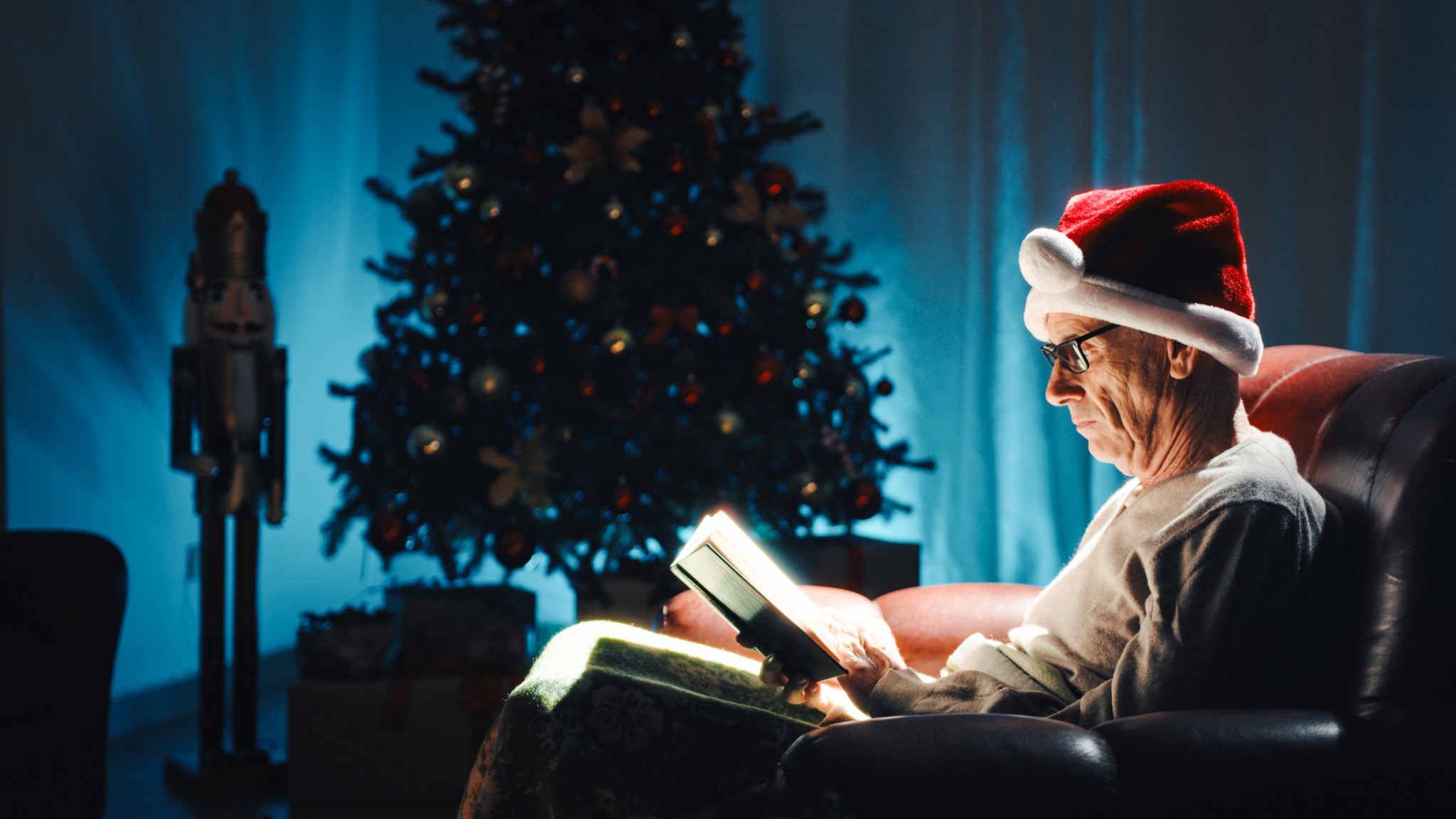
Some are rooted in Christmas itself. E. T. A. Hoffmann’s The Nutcracker begins on Christmas Eve, with presents and a curious nutcracker opening the door to a strange world. If your first association is the ballet, the original tale offers another way into that magic.
Hans Christian Andersen’s The Fir Tree gives us a different sort of Christmas story. A tree longs for what comes next, including the splendour of becoming a decorated Christmas tree, while struggling to appreciate the life it has.
It’s a poignant choice rather than a promise of uncomplicated cheer. Fairy tales can carry longing, loss and uncomfortable truths alongside their enchantment.
I’ve linked a free Andersen collection containing The Fir Tree, The Snow Queen and The Little Match Girl, plus a publisher’s edition of The Nutcracker. These are possibilities for exploring the theme, rather than books I’m claiming to have listened to already.
The Little Match Girl takes place on New Year’s Eve, while The Snow Queen gives us winter magic without being simply a Christmas story. Andersen’s tales can be deeply sad, so I’d choose according to the sort of reading you want that evening.
Not every snowy fairy tale is a Christmas tale, either. Winter provides an atmosphere; the occasion itself may have another role, or none at all.
That brings us to a wardrobe.
Always winter, but never Christmas
The Lion, the Witch and the Wardrobe by C. S. Lewis is many readers’ first doorway into Narnia.
It was the first book published, although The Magician’s Nephew comes earlier in the world’s chronology. So there are two different meanings of “first” before we’ve even stepped past the coats.
Under the White Witch’s rule, Narnia is “always winter but never Christmas”.
That’s a wonderfully revealing distinction for our discussion. Snow alone doesn’t bring celebration, generosity or the pleasure of something to anticipate. Winter stretches on while Christmas is withheld.
It isn’t the condition of Narnia for the entire story: Father Christmas does appear as the Witch’s hold begins to weaken. The contrast between a frozen world and the return of hope is part of what makes this such an interesting seasonal choice.
We don’t have to settle whether it belongs in one precise category. It gives us winter fantasy with Christmas woven into its imaginative world, and plenty to consider beyond the presence of snow.
Christmas reading without Christmas in it
Then there are books I want to read or hear over Christmas that don't need a festive setting.
John Buchan’s The Thirty-Nine Steps is one of mine. I love Richard Hannay, and this is the sort of classic adventure I’d happily choose as an audiobook during the holidays.
A screen adaptation is something I associate with Christmas viewing too. That’s my expectation and preference, rather than a promise that a particular version will be on television this year.
The story itself doesn’t become a Christmas story because I choose it in December. Instead, the season gives me the opportunity and inclination to return to it.
I’ve included a free ebook link for anyone who fancies reading rather than listening. I haven’t picked a particular Audible edition here, since narrator and version can make a difference.
This is another corner of my reading alongside the cosy mysteries: a familiar adventure chosen because I enjoy it.
Perhaps that’s the most useful distinction. A Christmas bookshelf can contain books about the season and books that belong to our own way of spending it.
Some offer festive magic. Others simply offer the pleasure of reading exactly what we fancy.
A voice in the Christmas kitchen
Audiobooks are a large part of my December.
I do plenty in the kitchen over Christmas, and I’ll usually have something playing while I’m occupied there. Listening adds another layer to those stretches of preparation.
A narrator can keep me company while my hands are busy. Later, I can take the story through to the knitting without needing to keep a printed page open beside me.
There’s a practical pleasure in that arrangement.
My brain doesn’t switch off readily, and I often feel more productive when I’m combining activities. Knitting with a story feels like two enjoyable things happening together.
An audiobook also travels well between the different parts of a day. A physical book asks me to stop and give it my hands and my attention. Audio can come along while I make something.
Of course, some patterns require the narrator to wait. When counting becomes demanding, I pause rather than discover that I’ve missed both a clue and several stitches.
I particularly enjoy abridged versions too. The important thing is choosing the version that suits the listening you want. The links accompanying this episode identify the books or series; check the edition, narrator and format before choosing your own.
Some titles become familiar seasonal company. Others bring the anticipation of a story I haven’t heard.
Both have a place.
A bookshop on the bookshelf
Jenny Colgan’s The Christmas Bookshop was a lovely listen for me.
Its Edinburgh bookshop setting offers a very appealing place to spend some imaginary December hours. Carmen arrives to work in a struggling shop, navigating changes in her own life as Christmas approaches.
That’s enough of the setup from me. I’m leaving the discoveries to the book.
I’ve also listened to Midnight at the Christmas Bookshop. The pleasure of returning to a fictional place can be rather like revisiting a favourite film: you arrive with some familiarity, ready to find out what happens next.
These are choices for readers who fancy a festive, bookish setting and a change of scene. A fictional shop can provide an entire evening out while you remain comfortably at home.
The official pages for both titles are linked in the blog and episode notes, with routes to their different formats.
There’s a small danger in listening to a story about a bookshop, of course.
It may encourage the belief that what your house really needs is another book.
I’m prepared to consider the argument.
Mistletoe with a mystery attached
Mistletoe Murders is one of my favourite audiobooks.
Written by Ken Cuperus, the Audible series features Cobie Smulders and a full cast. Emily Lane runs a Christmas-themed shop, and murder investigations become part of her life alongside the business.
For me, the audio is the version I really enjoy. I prefer it to the screen adaptation, and I’ve found myself looking forward to another instalment as Christmas approaches.
That anticipation becomes part of the ritual.
A returning series gives you familiar company with a fresh story to follow. You already have a connection with the world, so there’s pleasure in opening the door again.
If you like a festive mystery told through a cast of voices, this is one I’d point you to. I’ve included the UK Audible series page so you can see the instalments and decide where to begin.
It’s a different experience from one narrator reading a novel. That distinction is worth considering when choosing what you’d enjoy.
My wider Christmas listening also includes Jacqueline Frost’s mysteries and Agatha Raisin stories. I like having a seasonal puzzle to unravel.
What matters is the pleasure of following the clues and spending time with the story. I’m choosing my own version of a comfortable evening, even if the fictional residents are having a considerably less restful one.
Cats, Christmas and another sort of company
Christmas at the Cat Café by Jessica Redland is another title I’ve listened to.
I realise that putting cats and Christmas in a title is already making a fairly persuasive case for my attention.
The story follows Tabby as she works towards opening a cat café on Castle Street in Whitsborough Bay. For anyone wanting a festive story about making a fresh start, with friendship and feline company in the picture, it offers another direction for this little shelf.
I’ve linked the publisher’s page, where you can explore the available formats.
My actual cats are unlikely to take an interest in a fictional café unless it interferes with their seating arrangements.
Still, it’s good to have choices beyond mysteries. A shelf can hold a puzzle for one mood and a warmer romantic story for another.
I don’t need to pick one genre and stick with it until January.
A ghost at the fireside
Then we have the Christmas ghost story.
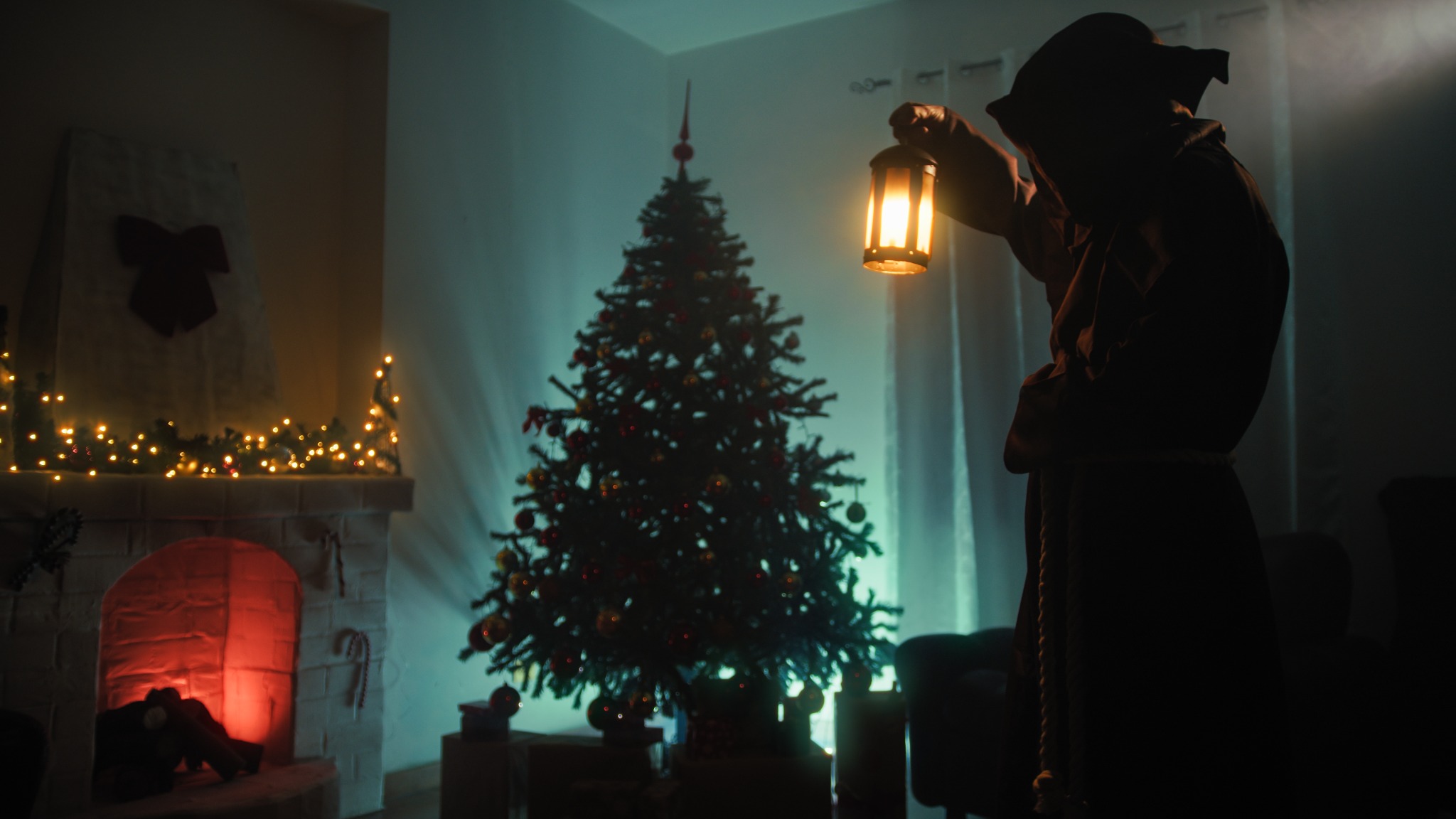
A Christmas Carol is an obvious place to begin. Dickens gives us a tale where the supernatural serves a very human question about how somebody lives and what might change.
If you’ve watched several adaptations but never read the story itself, perhaps this is the year to try. Project Gutenberg has a free ebook, linked with this episode, which you can read online or download.
There’s M. R. James too, whose ghost stories have their own Christmas association through telling them aloud to friends in the season.
That doesn’t make every story a tale set at Christmas. We’re back to Jane’s question: the occasion of reading can shape the tradition as much as the setting on the page.
His stories can be genuinely unsettling. I’d keep that shelf separate from a promise of gentle comfort.
Some readers enjoy a shiver alongside the firelight. Others would prefer their evening to remain entirely free of unexplained noises.
Both can find something to read.
For anyone curious, I’ve included the publisher’s Ghost Stories page and a free ebook of Ghost Stories of an Antiquary by M. R. James on Project Gutenberg. You can read the latter online or download it, making a little seasonal exploration possible without buying another book.
There’s also a title still waiting for me: Bill Bryson’s The Secret History of Christmas. I haven’t listened to it yet, so this is an item on my own list, rather than a review.
Perhaps mentioning it here will improve its chances of reaching the front of the queue.
The annual under the tree
Books at Christmas take me back to annuals.
I loved the Blue Peter annuals. When I was younger, Grandma used to buy me Bunty, and in my teens there was Jackie.
An annual had a particular sort of promise. Here was something to open, dip into and return to over the holiday.
Mum had the Fireside Book and The People’s Friend annual, with stories she could sit and enjoy.
Remembering those makes me think about the pleasure of a collection. You don’t always want to commit to an entire novel. Sometimes a complete short story is exactly the right size for the time you have.
I miss that feeling of an annual chosen especially for you.
Adult annuals and story collections do still exist, but I don’t seem to encounter the ritual in quite the same way now. Perhaps we could bring back our own version: choosing something full of stories to enjoy gradually.
It needn’t be an impressive volume. The pleasure lies in knowing something is waiting when you sit down.
A book can be a present to your future self: here is a little time you might enjoy.
Stories that came with me
The People’s Friend also reminds me of travelling for work.
When I was going backwards and forwards to Germany, I’d buy a copy before leaving the country. Sitting with a meal on my own, I could read a story rather than simply sit there.
Nearer Christmas, I bought the specials too.
Sometimes I was away over a weekend. I might visit a museum and then return to the hotel, with Stuart back at home.
The evening could feel long.
Familiar programmes dubbed into German offered their own peculiar experience. Midsomer Murders was particularly odd when Barnaby had somebody else’s voice.
So I had my magazines, films saved on the iPad and audiobooks.
They provided something familiar in a place where I was away from the people and routines I knew.
That’s another reason I don’t think reading is only about the plot. The circumstances around a story become part of what we remember.
A magazine over dinner can be company. An audiobook in a hotel room can make the evening feel less empty.
Years later, the title brings those occasions back.
Our Christmas bookshelf can hold those memories alongside the books themselves.
Permission to do one thing
These days, I try to persuade Stuart to come to the bookshop with me in December.
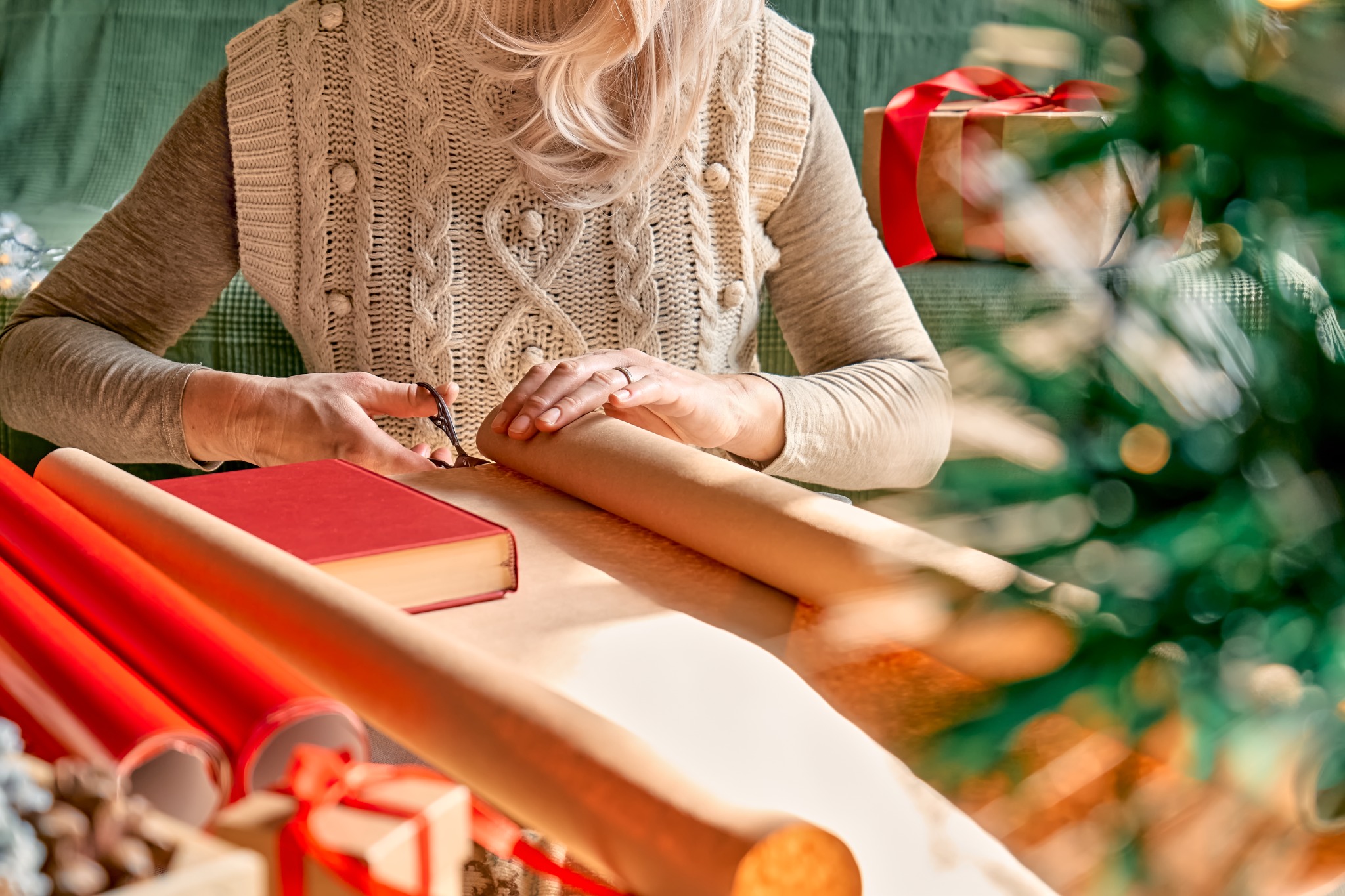
We choose books so there’s something ready for the time we take off over Christmas.
That reminds me of Jólabókaflóð, the Icelandic Christmas book-giving tradition I wrote about in 2022. Books are exchanged on Christmas Eve, with the pleasure of reading them becoming part of the celebration.
I’ve linked my earlier post, Jolabokaflod: The Icelandic tradition of giving a book on Christmas Eve, for anyone who fancies exploring that idea.
What appeals to me is giving somebody both a story and the invitation to enjoy it. Choosing a book for yourself can be a lovely version of that too.
I love that small anticipation: selecting what might accompany a quieter day before we’ve reached it.
Then comes the part I find surprisingly difficult.
Sitting down and simply reading.
With knitting and an audiobook, I can see progress on a project while following a story. Reading a physical book feels, in my own slightly unreasonable accounting system, like “just reading”.
Draig challenged that during our discussion. Why should it need another activity attached?
It’s a fair question.
I’m perfectly happy to tell somebody else they’re allowed to enjoy a book. Apparently applying the same permission to myself requires further consideration.
Over Christmas, I do let myself have a day or two when sitting with the pages is enough.
No stitches to count. Nothing to finish for somebody else while I read.
Perhaps that’s a tradition worth keeping.
There’s no requirement to turn every enjoyable hour into evidence of productivity. I can appreciate the pleasures of listening while making and still give a book my undivided attention.
What belongs on your Christmas bookshelf?
Our selection today has room for an Edinburgh bookshop, a Christmas shop with mysteries attached, cats, ghosts and the stories that kept me company away from home.
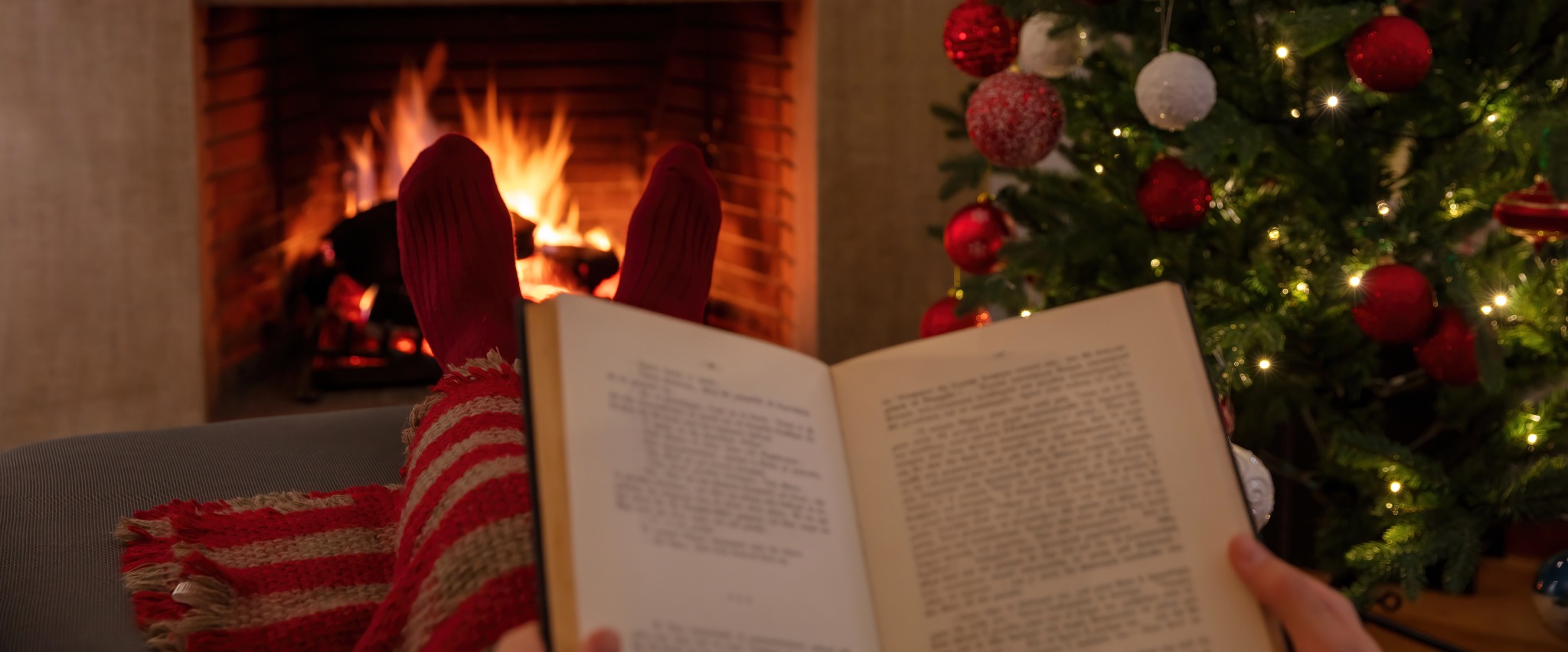
It also has room for books that haven’t been chosen yet.
You may have an annual you remember, a narrator who sounds like December or a story that brings somebody close again.
Perhaps your favourite isn’t set at Christmas at all.
I’d love to hear what you return to, and why.
The recommended links are in the accompanying blog and episode notes. You can find the rest of this series at The Christmas Lace Notes, with listening options on my podcast page.
For now, I’m leaving you with a small invitation: choose something you’d enjoy reading, without first deciding whether it’s sufficiently useful.
Take it to your comfortable chair when the opportunity comes.
The washing-up may still be there afterwards.
So will the next chapter.
Further reading and listening
- The Nutcracker
- The Fir Tree
- The Lion, the Witch and the Wardrobe
- The Thirty-Nine Steps
- Jolabokaflod, my earlier Christmas Eve book-giving post
- Hercule Poirot’s Christmas
- The Christmas Bookshop
- Midnight at the Christmas Bookshop
- Mistletoe Murders
- Christmas at the Cat Café
- A Christmas Carol
- Ghost Stories
- Ghost Stories of an Antiquary, free ebook
- The Secret History of Christmas